
Cardiology

Hub Pet Clinic

Arjan

Al Sayyah Residence Shop 19 –
Arjan – Dubai

Open daily 9:00 AM – 10:00 PM

Hub Vet Clinic

Sharjah - Muwaileh

University City Rd – Behind thumbay hospital daycare – Muwaileh Commercial – Industrial Area – Sharjah

Open 24 hours

Hub Vet Clinic

Sharjah - hoshi

Al Badee Suburb – Hay Hoshi – Behind Meleha Street – Sharjah

Open daily 9:00 AM – 10:00 PM

Understanding Pet Heart Disease

All our branches are home to certified veterinary cardiologists who strictly follow the American College of Veterinary Internal Medicine (ACVIM) guidelines.

Our cardiology services include


  • Diagnosis and management of congenital and acquired heart diseases
  • Early detection of cardiac conditions before complications develop
  • Management of genetic and breed-related heart diseases
  • Expertise across all breeds, including:
  • Cats: Maine Coon, Himalayan, British Shorthair, Scottish Fold
  • Dogs: Doberman, Great Dane, toy breeds, miniature breeds, and brachycephalic breeds


Advanced Cardiac Diagnostics


  • High-resolution echocardiography with ECG integration
  • Full ECG interpretation using international standards
  • Comprehensive cardiac biomarker blood testing
  • Pre-anesthetic cardiac evaluation for senior pets and high-risk patients, minimizing anesthesia-related risks


24-Hour Cardiology Support & Follow-Up
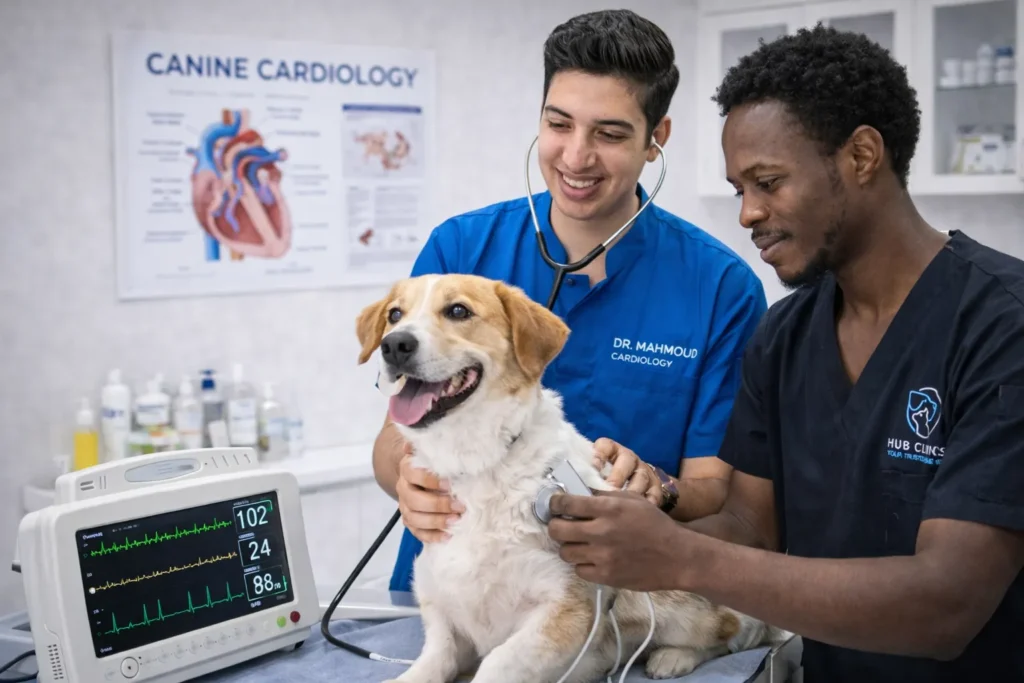
 

  • Continuous monitoring and follow-up for heart patients
  • Clear treatment plans, medication supply, and owner guidance
  • Dedicated support to ensure long-term quality of life


Cardiology

Protecting Your Pet’s Heart

Heart disease affects dogs and cats in many forms, from congenital defects present at birth to conditions acquired later in life. Hub Clinics’ cardiology department combines advanced diagnostics, specialised knowledge and compassionate care to diagnose, treat and manage cardiac conditions. Early detection and tailored treatment can dramatically improve your pet’s quality of life and longevity .


Why Seek Cardiology Care?

Specialist cardiology care offers numerous benefits :

  • Early detection of heart disease before complications develop .

  • Access to board‑certified cardiologists who specialise in animal heart health .

  • Preventive heart screening for breeds prone to cardiac issues .

  • Tailored treatment plans based on breed and specific heart conditions .

  • Accurate diagnosis of congenital and acquired heart conditions .

  • Management of high blood pressure and arrhythmias using medication and minimally invasive techniques .

  • Prevention of life‑threatening emergencies such as congestive heart failure .

  • Minimally invasive cardiac procedures for certain conditions .

  • Improved breathing, energy and quality of life for pets with controlled heart disease .

  • Safe long‑term monitoring and medication adjustments to maintain heart health .

  • Advanced imaging including echocardiography, ECG and X‑rays .

  • 24/7 access to expert cardiac care at our hospital .

Role of a Veterinary Cardiologist

A veterinary cardiologist completes additional training beyond veterinary school, including residency programs focused on diagnostic procedures, interventions and complex disease management . Cardiologists at Hub Clinics perform comprehensive cardiac evaluations, interpret echocardiograms and electrocardiograms, craft individualised treatment plans and monitor patients over time. They collaborate with your primary veterinarian to ensure continuity of care .

Common Heart Conditions in Pets

Our cardiologists diagnose and treat a range of conditions :

  • Degenerative Mitral Valve Disease (DMVD): The most common heart disease in small and older dogs. The mitral valve thickens and leaks, leading to congestive heart failure. Symptoms include coughing and difficulty breathing .

  • Dilated Cardiomyopathy (DCM): Affects large breeds such as Doberman Pinschers, Boxers and Great Danes. The heart muscle thins and the chambers enlarge, causing poor pumping efficiency and fluid buildup .

  • Hypertrophic Cardiomyopathy (HCM) in cats: The heart muscle thickens, reducing the heart’s ability to fill properly. Cats may show rapid breathing, lethargy and loss of appetite .

  • Arrhythmias: Abnormal heart rhythms (tachycardia, bradycardia, premature beats, atrial fibrillation) may occur alone or with other heart diseases. Signs include weakness, exercise intolerance or fainting .

  • Congenital defects: Structural abnormalities present at birth (e.g., Patent Ductus Arteriosus, pulmonic stenosis, subaortic stenosis, ventricular septal defects) can lead to congestive heart failure if left untreated .

  • Pericardial disease: Fluid or tumors in the sac around the heart can cause rapid decline; aspiration or surgery may be required .

  • High blood pressure (hypertension): Often seen in senior cats with kidney or thyroid disease and some dogs, placing strain on the heart and leading to strokes or heart failure .

  • Heartworm disease: Caused by Dirofilaria parasites transmitted by mosquitoes; prevention is crucial, and treatment requires a specialised protocol .

Services Provided by Our Cardiology Department

Our cardiology clinic offers a comprehensive array of diagnostic and treatment services :

  • Comprehensive heart examinations and diagnostics including physical exam, auscultation, blood pressure measurement and laboratory tests.

  • Echocardiography (ultrasound of the heart) to visualise heart structures, blood flow and function .

  • Electrocardiography (ECG) for rhythm evaluation and monitoring .

  • Thoracic X‑rays and advanced imaging to assess heart size, shape and lung health .

  • Tailored medication and treatment plans including diuretics, ACE inhibitors, beta‑blockers, antiarrhythmics, anticoagulants and dietary adjustments .

  • Minimally invasive cardiac procedures such as catheter‑based interventions when appropriate .

  • Pre‑anesthetic cardiac risk assessments to ensure safe anesthesia for pets with heart disease .

  • Collaboration with internal medicine and surgery teams for comprehensive care .

  • Screening for congenital and acquired heart diseases in puppies, kittens and adult pets .

  • 24/7 emergency cardiac care and critical support for acute heart failure or sudden decompensation .

Signs and Symptoms of Heart Disease

Heart disease often develops gradually. Watch for:

  • Coughing or abnormal breathing: Persistent cough, heavy or rapid breathing even at rest .

  • Exercise intolerance: Fatigue or reluctance to play or go for walks .

  • Lethargy and weakness: Appearing drowsy or fainting without cause .

  • Abnormal heart sounds: Murmurs or arrhythmias detected during routine exams .

  • Swollen belly or fluid buildup: Ascites or fluid in the chest, causing breathing difficulties .

  • Syncope (fainting): Any fainting episode warrants an ECG and cardiac evaluation .

If your pet exhibits any of these signs, schedule an evaluation promptly; early intervention improves outcomes.

Why Choose Hub Clinics for Cardiac Care

Our cardiology team brings specialized training, advanced diagnostic tools and a commitment to compassionate care. We collaborate closely with other departments—internal medicine, surgery, imaging and critical care—to offer holistic treatment tailored to each patient. With 24/7 emergency support and individualized monitoring, we guide pets with cardiac conditions toward better quality of life .

Frequently Asked Questions

Not necessarily. Heart murmurs are sounds created by turbulent blood flow and can range from innocent (not associated with heart disease) to significant. Some puppies have innocent murmurs that resolve as they grow. An echocardiogram can determine whether a murmur reflects underlying heart disease and, if so, what type and how severe.

Most cardiac conditions in pets cannot be cured but can be effectively managed. With appropriate treatment, many pets with heart disease enjoy good quality of life for months to years. Early detection and intervention generally lead to better outcomes, which is why cardiac screening and prompt attention to symptoms are so important.

Echocardiography is completely non-invasive and painless. Your pet lies on their side while a probe is placed against the chest wall. The procedure typically takes 30 to 45 minutes. Most pets tolerate it well without any sedation. A small area of fur may need to be shaved for optimal image quality.

Maintain a healthy weight, feed a cardiac-appropriate diet as recommended, ensure fresh water is always available, and follow exercise guidelines specific to your pet's condition. Keep up with medications as prescribed and monitor your pet for changes. Create a calm environment, as stress can exacerbate heart conditions. We'll provide personalized guidance for your pet's needs.

Monitor for increased coughing, difficulty breathing, decreased energy, reduced appetite, fainting episodes, or abdominal swelling. Counting your pet's sleeping respiratory rate at home is a valuable monitoring tool—we'll show you how. A sustained increase in resting respiratory rate often precedes other signs of heart failure progression. Contact us promptly if you notice any concerning changes.

A Commitment to Pet Well-being

At Hub Clinics, we don’t just treat pets – we care for family members. Our veterinary hospital in UAE combines advanced medical technology with compassionate service to deliver the best possible outcomes. From preventive care to complex surgeries, we’re dedicated to enhancing the health and happiness of every pet that walks through our doors.

Trusted by Pet Lovers Across UAE

24/7 Emergency Veterinary Services

Board-Certified Veterinary Specialists

Premium Pet Nutrition & Wellness Products