Perianal fistulas in dogs, when a seemingly digestive complaint reveals destructive inflammation of the surrounding tissue.
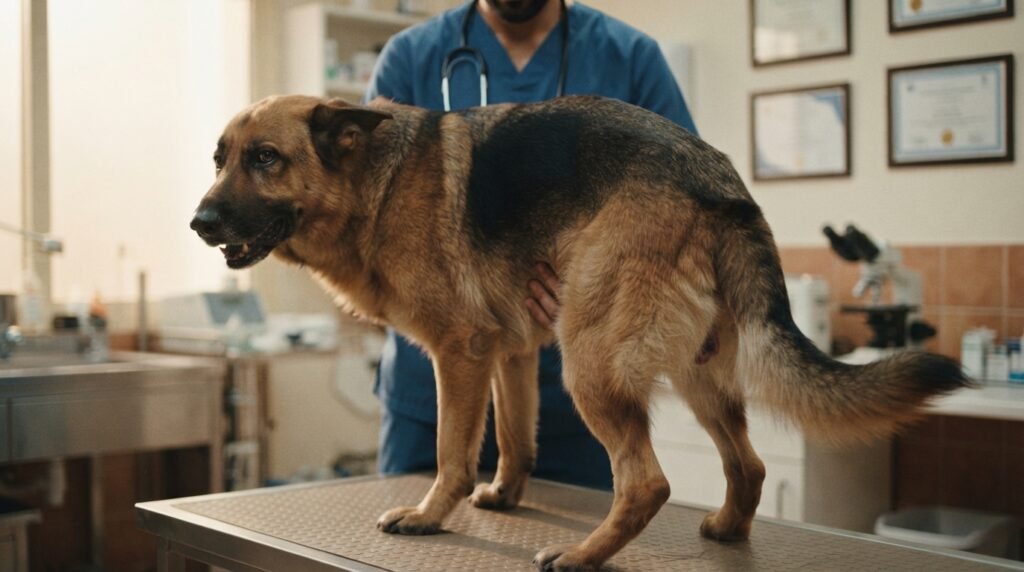
The dog approaches its usual spot, assumes the position to defecate, then hesitates.
It strains. Sometimes it passes only a small amount of stool. Other times, it abandons the attempt altogether.
The owner describes constipation. Perhaps the stool is too hard, or something is obstructing the passage.
But the examination reveals a different problem.
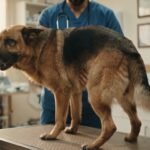
Beneath the tail, the skin surrounding the anus is inflamed. Between the folds are small ulcerated openings, some discharging fluid. The tissue is so sensitive that even lifting the tail causes considerable discomfort.
The dog is struggling to pass stool. But the source of pain may lie in the tissue the stool must pass through, rather than inside the bowel itself.
This is one of the clinically important presentations of canine perianal fistulas, also known as anal furunculosis.
The openings are often smaller than the disease beneath them
Perianal fistulas do not always present as large, obvious wounds.
Early lesions may be concealed beneath dense hair or within the folds of skin surrounding the anus. A small area of ulceration can coexist with deeper inflammatory tracts extending through the perianal tissues.
In more advanced disease, multiple lesions may merge, producing extensive ulceration, discharge and substantial pain.
The clinical severity is not necessarily reflected by the size of the visible opening.
A dog may have only a few small lesions yet become increasingly reluctant to defecate, sit comfortably or tolerate examination.
This discrepancy matters.
Repeated straining does not always indicate that stool is difficult to move through the intestine. Sometimes, the dog is anticipating the pain associated with defecation.
The finding that changes the diagnosis
The location of the lesions is particularly important.
A ruptured anal-sac abscess can also produce pain, discharge and an opening beside the anus. Superficially, the conditions may appear similar.
But perianal fistulas represent a different disease process.
They are generally associated with chronic, immune-mediated inflammation involving the perianal tissues. Although their exact pathogenesis is not fully established, German Shepherd Dogs have a recognised predisposition.
An anal-sac infection, by contrast, originates within the glandular structure itself.
At examination, we therefore need to establish whether the lesions arise from the anal sacs, the surrounding tissues or another underlying pathology.
This distinction cannot reliably be made from the owner’s description of straining alone.
The direction of treatment depends on identifying which tissue is diseased, not simply where the discharge appears.
Why the rectal examination still matters
Although the visible lesions are outside the rectum, a complete assessment cannot stop at the skin.
We need to evaluate the anal sacs, assess the extent of perianal involvement and consider whether concurrent rectal or gastrointestinal disease contributes to the clinical signs.
In severely painful cases, sedation or anaesthesia may be necessary to perform an adequate examination without causing further distress.
We also consider other causes of ulceration or fistulous tracts, including neoplasia, infection and foreign-body reactions. Atypical or non-responsive lesions may require biopsy.
This matters because not every draining wound near the anus is immune-mediated disease.
And not every dog with perianal fistulas has an uncomplicated case of anal furunculosis.
Why another course of antibiotics may not resolve it
One of the most consequential distinctions in canine perianal fistulas is between secondary bacterial contamination and the inflammatory disease sustaining the lesions.
Antibiotics may be appropriate when a clinically significant secondary infection is present. However, treating bacteria alone does not address the underlying immune-mediated process.
For many confirmed cases, medical management centres on immunomodulatory treatment, including ciclosporin or topical tacrolimus, depending on disease extent and individual patient considerations.
This is a substantial departure from the historical reliance on surgical removal of affected tissues.
Surgery may still have a role in selected refractory cases or when concurrent disease requires intervention. But the potential for complications, including anal narrowing and incontinence, makes careful case selection essential.
Our concern is not simply whether the openings close.
It is whether the underlying inflammation is controlled sufficiently for the tissue to heal and remain comfortable.
The detail owners often notice first
At Hub Clinics, we consider a change in defecation behaviour important even when the stool itself appears normal.
A dog that begins hesitating before passing stool, repeatedly licking beneath its tail, avoiding sitting or reacting painfully when the tail is lifted may be showing discomfort that deserves a focused perianal examination.
These observations become especially significant when accompanied by discharge, an unusual odour, bleeding or visible skin lesions.
For dogs presenting with painful defecation or recurrent perianal wounds in Dubai and Sharjah, we recommend a veterinary assessment rather than assuming the problem is constipation or routine anal-gland irritation.
A dog that cannot pass stool, is in severe pain or becomes systemically unwell needs urgent attention.
At Hub Clinics, our approach begins with establishing whether the symptoms and anatomical findings support the same diagnosis, and whether the disease process requires more than local wound treatment.
Because sometimes the most important finding in a dog that cannot comfortably pass stool is not discovered in the intestine.
It is the painful, inflamed tissue surrounding the exit.
Hub Clinics – For the life you share.
Hub Pet Veterinary Clinic | Arjan, Dubai
Hub Vet Veterinary Clinic | Sharjah